The quality of soldering directly determines the reliability of electronic products, stability of mass production, and device longevity. One critical factor in a stable process is the proper flux. Its activity, composition, and compatibility with solder and assembly methods affect wetting, surface cleanliness, and defect rates.
At Electronic Technology, a contract electronics manufacturer, Interflux fluxes (Belgium) have been used for over 10 years, showing consistent results in both SMT and DIP assembly, as well as repair and service work.

What is Flux and Why It Matters
Flux is a process material that:
-
Removes oxide layers from metal surfaces;
-
Improves solder wetting;
-
Protects contacts from re-oxidation during soldering;
-
Ensures reliable electrical and mechanical connections.
Without high-quality flux, even modern equipment and premium solder cannot guarantee consistent results.
DIP Assembly: Flux is Critical
DIP (Dual In-Line Package) assembly involves inserting components into plated through-holes and soldering. Common in power, industrial, automotive, and telecom electronics, flux must:
-
Fully fill plated holes;
-
Ensure stable wetting of leads;
-
Leave minimal residues.
Practical Use: Mass Production and Repair
Mass Production: Repeatable processes, low defect rates, lead-free soldering, and residue control are essential. Interflux fluxes ensure stable parameters in wave, selective, and SMT soldering.
Repair and Prototyping: Flux must activate quickly, allow precise local application, be compatible with different solders, and control residues. Professional fluxes work well in BGA reballing, SMD replacement, manual DIP assembly, and PCB modifications.
About Interflux
Interflux Electronics N.V. (Belgium) is an international solder materials manufacturer with over 35 years of experience, specializing in fluxes, solders, and auxiliary materials, including innovative low-residue and no-clean solutions. Their products cover:
-
Wave and selective soldering;
-
Reflow soldering and SMT;
-
Stencil printing;
-
Rework, repair, and prototyping;
-
Hand soldering and OSP coating;
-
Jet-fluxing for automated dispensing.
Examples of Interflux Fluxes
-
IF2009M: Water-soluble No-Clean flux for wave/selective soldering, SMT, and clean repairs.
-
IF8300: Gel flux for SMD/BGA, including reballing and complex repairs.
-
IF8300-4: Brush-on gel for manual DIP soldering, labs, and prototyping.

Solder with Built-in Flux
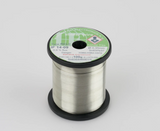
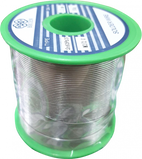
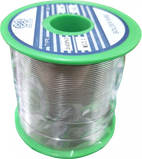
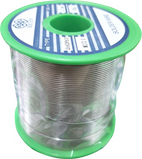
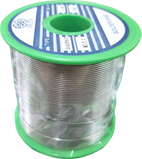
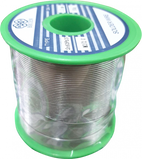
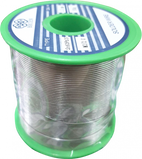
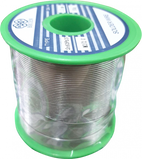
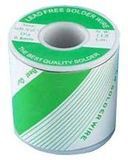
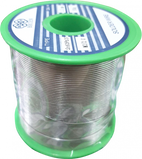
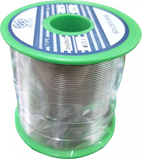
Flux-core solder wires are standard for hand soldering and small series production. Examples: Sn63Pb37 and lead-free SAC/SC alloys. Flux-free solder is used when a specialized flux is required or residue control is critical.
When to Use Separate Flux
Separate flux is needed for complex boards, BGA/fine-pitch SMD, wave or selective DIP soldering, or when reliability requirements are high. Often, a combination of flux-core solder and additional flux is used.
Conclusion
Choosing the right flux depends on assembly technology, solder type, cleanliness, and process stability. Interflux materials provide reliable soldering for both mass production and service/repair applications. Electronic Technology offers proven fluxes and solders from stock—practical solutions for manufacturers, service centers, and engineering labs.